
A busy pipeline can hide a costly truth: qualified prospects may be leaving because the sales process is unclear, slow, or inconsistent. To improve sales conversion process performance, owners need more than a stronger closing script. They need a practical way to see where buyers stall, define what should happen next, and hold the team accountable for each step.
Schedule a free consultation with The Chalifour Consulting Group to identify the sales bottlenecks that are costing your team qualified opportunities.
To improve sales conversion process results, map the full path from first inquiry to signed agreement, then measure where qualified prospects wait, drop off, or lose confidence. The Chalifour Consulting Group helps business owners turn that diagnosis into execution by tightening qualification, follow-up standards, proposal handoffs, and weekly sales accountability. Start with one bottleneck, test one process change, and review results before changing the next stage.
This guide walks through a step-by-step approach an SMB owner can use to audit the sales path and diagnose conversion barriers. It also explains how to improve scripts, tighten handoffs, and track the measures that show whether the process is getting stronger.
What does it mean to improve sales conversion process?
To improve the sales conversion process means making the route from initial interest to closed sale clearer, faster, and more consistent. It does not mean pushing every prospect harder. It means helping the right prospects move through a buying decision with fewer gaps, delays, and unclear next steps.
A complete path, not a single pitch
The conversion process starts before a proposal is sent. It includes lead capture, qualification, first response, discovery, proposal preparation, follow-up, negotiation, approval, and handoff to delivery. Each stage should have a purpose, owner, entry rule, exit rule, and next action.
This complete view helps owners diagnose the real source of missed sales. A low close rate may begin with poor targeting, weak qualification, delayed follow-up, or a proposal that does not address the buyer’s actual business problem. The U.S. Small Business Administration advises businesses to define the steps customers take when they decide to buy, which supports a more visible and manageable sales path.
The basic conversion formula
Sales conversion rate is calculated by dividing completed sales by total leads for the same period, then multiplying by 100. For example, 12 sales from 60 leads equals a 20 percent conversion rate. That formula is useful, but the overall rate is only the starting point.
Stage-by-stage conversion rates are more actionable. Track how many leads become qualified meetings, how many qualified meetings become proposals, and how many proposals become closed deals. Then review how long each stage takes and why prospects stop moving.
- Lead to qualified meeting: Are the right prospects entering the pipeline?
- Qualified meeting to proposal: Is discovery confirming need, fit, timing, and authority?
- Proposal to closed sale: Does the recommendation address the buyer’s goals, concerns, and decision path?
Why process discipline matters
A disciplined sales process gives the team shared rules instead of leaving each sale to instinct. It sets standards for response time, qualification, follow-up, proposal quality, and CRM updates. That makes coaching more specific and results easier to improve.
Discipline also protects the team’s time. A clear lead qualification framework helps salespeople focus on prospects with a real need and a reasonable path to purchase. Owners can then coach against evidence, test one change at a time, and build a sales system that improves through use.
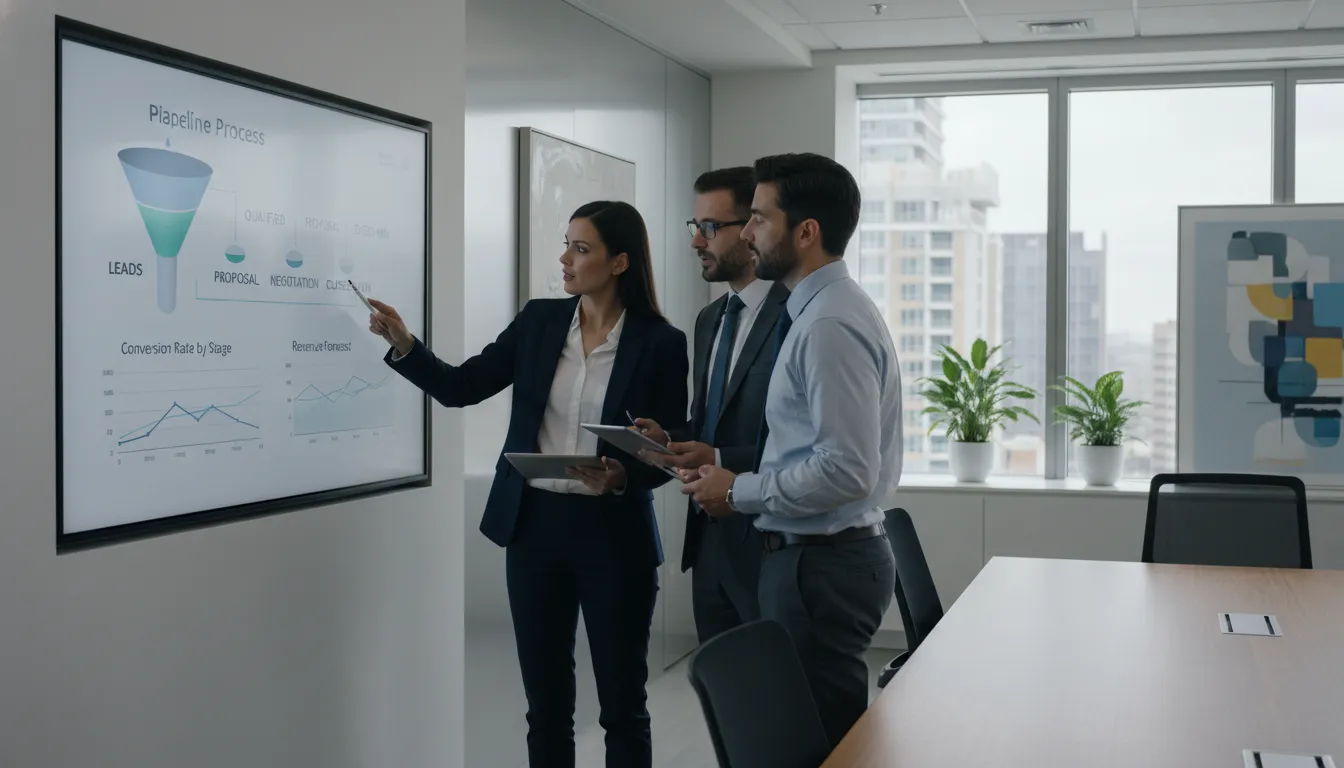
Step 1: Audit the sales path from lead to closed deal
Before changing scripts or adding tools, map how a real lead moves through your business today. This audit gives owners and managers one shared view of the sales path. It also shows where good opportunities stall, wait, or leave.
Start with what the team actually does, not what the process guide says. Use a recent sample of opportunities from multiple sources, including referrals, web forms, calls, events, and outbound outreach. Follow each opportunity from first contact to a won, lost, or stalled result.
Build the current-state map
List every lead source. Record where each inquiry starts and how it enters your system. Separate sources so you can compare lead quality later.
Define the funnel stages. Write the plain-language meaning of each stage, from new lead through closed deal. Add an entry and exit rule for every stage.
Map ownership and handoffs. Name the person responsible at each point. Record how the next owner learns about the lead and accepts it.
Review qualification. Note the questions used to test fit, need, timing, budget, and decision authority. Flag leads that advanced without meeting the stated rules.
Measure follow-up speed. Compare inquiry time with first response, first live conversation, and each later touch. Mark long waits and leads with no next action.
Trace proposals and decisions. Record who prepares, reviews, sends, and follows up on each proposal. Capture the stated reason for every won or lost deal.
Use evidence, not memory
A useful audit relies on records. Pull dates, notes, emails, call logs, proposals, CRM fields, and outcomes. Then compare those records with the team’s account of the process. Gaps often point to unclear ownership or steps that happen outside the system.
Pay close attention to qualification because weak fit can waste time across the whole path. Consistent criteria help the team decide which prospects deserve immediate sales attention, which need nurturing, and which should be declined politely.
Finish with a practical baseline
End the audit with a one-page map and a short issue log. For each issue, name the stage, evidence, likely cause, owner, and next test. Rank issues by their effect on qualified opportunities, not by how easy they are to fix.
This baseline keeps the team from guessing. It separates lead-source problems from handoff, follow-up, proposal, and closing problems. Managers can then choose the first change and track whether it moves more qualified buyers forward.
Step 2: Find the bottlenecks that block qualified buyers
A bottleneck is the point where a qualified buyer waits, loses confidence, or exits without a clear next step. To improve your sales conversion process, review each stage separately instead of treating every lost deal as the same problem.
Start with a simple stage report for the last 30 to 90 days. Record how many leads entered each stage, how many moved forward, and how long each move took. Then review several stalled, won, and lost deals to learn what happened between the numbers.
Response and qualification gaps
Inspect the path from inquiry to the first useful conversation. Look for slow replies, missed calls, unclear intake questions, and leads that sit without an assigned owner. A fast reply still fails if nobody confirms the buyer’s need, budget, timing, and authority.
Compare poor-fit leads with prospects that became strong opportunities. If every rep uses different qualification standards, create shared criteria and reinforce them in coaching. Clear rules help the team decline weak leads sooner and give qualified buyers the right level of attention.
- Track time from inquiry to first response and first live conversation.
- Check whether every lead has an owner, status, and dated next step.
- Review why disqualified leads entered the pipeline in the first place.
Discovery and follow-up gaps
A buyer may stall when discovery stays shallow. Review call notes for a clear business problem, desired result, buying process, concern, and agreed action. Weak notes often point to weak discovery, while vague next steps make follow-up easy to delay.
Also inspect the quality of each follow-up. Repeated messages that only ask whether the buyer is ready add little value. A structured sales meeting agenda can help managers review stalled deals, assign actions, and hold owners accountable.
Proposal and decision gaps
Finally, trace the path from verbal interest to signed agreement. Delays may come from slow proposal creation, unclear scope, surprise pricing, missing decision-makers, or unanswered concerns. Ask what the buyer still needs, then assign one person to remove that barrier.
| Stage | Common bottleneck | Process fix |
|---|---|---|
| Lead response | Inquiry waits too long. | Assign a first-response owner and target time. |
| Qualification | Poor-fit leads advance. | Use shared fit, need, timing, and authority rules. |
| Discovery | Buyer problem stays vague. | Require notes on goals, barriers, and decision criteria. |
| Proposal | Value is unclear. | Connect scope to the buyer’s stated business problem. |
| Follow-up | No next step is owned. | Set owner, due date, and next action after every contact. |
Step 3: Improve scripts, handoffs, and follow-up standards
Once the weak points are clear, turn each finding into a simple standard the team can use. The goal is not to make every conversation sound identical. It is to give salespeople a reliable path while leaving room to listen, think, and respond.
Talk to a CCG advisor if your sales team has leads but lacks a consistent process for moving qualified prospects forward.
Scripts that guide useful conversations
Rewrite scripts around the questions buyers need answered, not the pitch the team wants to deliver. A good opening confirms why the prospect reached out, what a useful outcome would look like, and how the conversation will proceed.
Build discovery questions that reveal the problem, its effect, the desired result, and the decision process. Ask what the prospect has tried, what blocked progress, and who needs to support the choice. These questions help the team qualify without pressuring a poor-fit buyer.
- Opening: Confirm the purpose, available time, and next topics.
- Discovery: Explore goals, barriers, urgency, budget, and decision roles.
- Fit: Explain where the service can help and where it cannot.
- Close: Agree on one next step, its owner, and its due date.
Follow-up and proposal standards
Follow-up should make the decision easier. Create templates for common stages, but require each sender to add the prospect’s goals, open questions, and agreed next step. Every message should tell the buyer what happens next and when.
Proposal standards should connect the recommended work to needs uncovered during discovery. Use a shared format for scope, outcomes, roles, timing, price, assumptions, and approval steps. Templates reduce missed details, but they should never hide weak fit.
Handoffs with clear ownership
A sale can still fail after the buyer says yes. Define the handoff from sales to delivery with required notes, named owners, and a scheduled introduction. Include the buyer’s goals, promised outcomes, risks, key contacts, and first milestone.
This is where hands-on implementation support matters. Through business consulting and coaching, CCG helps owners turn process ideas into working standards, meeting rhythms, and accountability systems the team can actually use.
Which sales conversion metrics should you track?
Track each handoff in the pipeline, not just the final conversion rate. Stage metrics show where qualified buyers stall and give managers a clear place to act. They also keep a weak early stage from hiding behind a few large wins.
Core pipeline metrics
- Lead-to-meeting rate: Shows whether leads fit your offer and outreach earns interest.
- Meeting-to-proposal rate: Shows whether discovery uncovers real need, budget, and next step.
- Proposal-to-close rate: Shows whether proposals match buyer needs and make value clear.
- Response time: Shows how fast the team acts when a buyer shows interest.
- Follow-up completion: Shows whether promised touches happen on time.
- Average deal cycle: Shows how long opportunities take to reach a decision.
- Closed and lost reasons: Shows why buyers choose you, delay, or select another option.
Useful views for diagnosis
A single company-wide average can hide the source of a problem. Review metrics by lead source, offer, salesperson, deal size, and customer type. Compare each group with its own past results before setting targets.
For example, a low lead-to-meeting rate may point to poor lead fit, weak outreach, or both. A low meeting-to-proposal rate may show that discovery calls lack focus. A low proposal-to-close rate may reveal unclear value, pricing concerns, or missing decision-makers.
Metrics tied to action
Give every metric an owner, a review schedule, and a planned response. If response time slips, decide who clears the queue. If proposal-to-close falls, review recent calls and proposals before changing price.
Track revenue alongside stage activity so better conversion supports sound growth. For owners who need tighter forecasting, budgeting, and cash flow visibility, fractional CFO services can connect sales process improvements to broader financial planning.
Step 4: Turn the new process into weekly execution
A better sales process only works when the team uses it each week. Treat the rollout as a short cycle of Discovery, Development, and Implementation. First, find what blocks deals. Next, agree on a practical change. Then use it in live conversations and review the result.
A focused weekly sales review
Hold one short sales review at the same time each week. Review new leads, stage movement, stalled deals, wins, losses, and promised follow-ups. Spend most of the time finding patterns and deciding what the team will test next.
- Start with the conversion goal and the week’s actual result.
- Review a few deals that moved forward or became stuck.
- Name one process issue that affected several opportunities.
- Assign each next step to one person with a due date.
- Decide what evidence will show whether the change worked.
CRM records the team can trust
The CRM should show what happened, what comes next, and who owns the action. Require reps to update deal stage, next step, due date, loss reason, and key notes before the review. Clean records make bottlenecks easier to spot and prevent good leads from going quiet.
If the next action is missing, the owner updates it during the meeting. If a deal stays in one stage too long, the team decides whether to advance it, change the approach, or close it out.
Coaching from real deal data
Coach reps on specific moments instead of giving broad advice. Review one call, email thread, or proposal and ask where the buyer lost confidence. Then practice a better question, response, or next-step request before the rep returns to the deal.
Support should fit the rep and the issue. Some people need help with discovery, while others need a stronger follow-up habit. Ongoing business coaching can help leaders set expectations, review results, and keep the team accountable through each test.
What mistakes keep sales conversion rates low?
Many owners respond to low conversion by buying more leads. That can add volume to a process that already loses qualified prospects. Before spending more, map each stage from first contact through the buying decision.
Chasing lead volume before fixing process
More leads do not solve unclear ownership, weak discovery, slow proposals, or missing follow-up. In many SMBs, the fastest gain comes from helping existing qualified prospects move through the path with less friction.
Changing scripts without coaching
A script can define useful questions and next steps, but sellers still need practice, feedback, and coaching. Review real calls or role-play common objections. Keep the script stable long enough to learn which changes help.
Measuring only the final number
If you measure only closed deals, you see the result but not the cause. Track movement between stages, response time, follow-up completion, lost-deal reasons, and revenue. These measures show whether the problem starts with outreach, discovery, proposals, or final decision-making.
Request a free consultation to turn your sales conversion data into a clear improvement plan with owners, actions, and follow-up accountability.
Frequently Asked Questions
How do you calculate sales conversion rate?
Divide completed sales by total leads for the same period, then multiply by 100. For example, 20 sales from 100 leads equals a 20 percent conversion rate. Keep the lead definition and time period consistent so comparisons remain useful.
What is the fastest way to improve sales conversion process performance?
Start with a stage-by-stage audit. Identify where qualified prospects stall, assign ownership for that stage, test one specific improvement, and review the result weekly before changing the next part of the process.
Which sales conversion metrics should an SMB track?
Track lead-to-meeting rate, meeting-to-proposal rate, proposal-to-close rate, response time, follow-up completion, sales cycle length, and specific lost-deal reasons. These measures show where the process needs attention.
How can better lead qualification improve conversion?
Better qualification keeps the team focused on prospects with a clear need, realistic timing, authority, and fit. It also reduces wasted proposals and makes stage conversion rates easier to interpret.
How often should a sales conversion process be reviewed?
Review the core sales process weekly at first, then monthly once the team has consistent standards. Weekly review helps managers catch missed follow-ups, stalled deals, and weak handoffs before they become habits.
Ready to Build a Sales Process That Converts More?
Waiting to fix an inconsistent sales process lets qualified leads stall, follow-ups slip, and owners keep guessing while avoidable revenue gaps grow. A practical plan gives your team clear steps, better coaching evidence, and a steadier path from first conversation to agreement.
The Chalifour Consulting Group works with small and medium-sized businesses to diagnose the real sales bottleneck, build the right process, and help teams execute with accountability. Schedule a free consultation to identify your highest-priority sales process gaps and build a focused improvement plan.